.
This summer Sanae Takaichi, the Japanese Prime Minister, visited the United States and you might remember President Trump’s comment about how the two nations had always gotten on. Nice, but not a man known for gracious or considered diplomacy he couldn’t help but follow it with the words ‘well, apart from Pearl Harbour’. Now, this would have caused me to bury my head in my hands at any point but it just so happens that the very day before I had sat numbed and sobered on a bench in nowhere other than the Hiroshima Peace Memorial Park, having just visited the museums, exhibits and sculptures that record what happen there in 1945. Putting aside any motivations and moral discussions around the reason for either attack I think we can say that what the US did to Japan is far worse than what Japan did to the US, far worse in fact than what anyone has ever done to anyone.
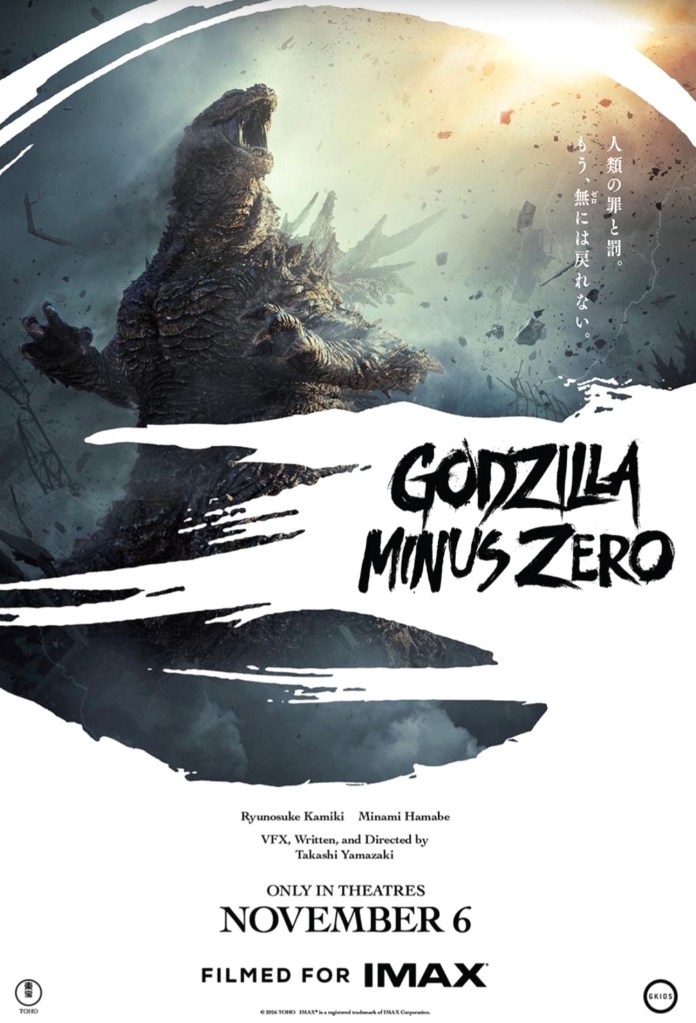
The whole Godzilla franchise is famously a response to this terrible bombing, two bombings of course. The metaphor of a unimaginable radioactive monster coming from across the sea and bringing terrible destruction has never been worn lightly by these films but I’m not sure the event has as explicitly been a part been of the story as much as it is here. The Godzilla movies have to some extent lost sight of this over time, especially the American ones of course, but Takashi Yamazaki’s second of these films deals with it explicitly. The kaiju invasions here are not representative of atomic weapons; they are part of the aftermath. 1993’s Godzilla Minus One was released in the same year as Oppenheimer and neither movie chose to depict the results of the bomb but, set in 1949, this one does and the whole film bears the scars. There is the idea here that Godzilla could be a weapon itself, which is a part of lots of the movies that followed the 1954 original with all kinds of other huge monsters needing taking down, but the notion is very different in this context. America is a key part of the story here as well and the country is understandably more than a little demonised. Donald is not going to like it. He might have to add it to his crass and self centred list of times Japan and the States have not behaved like total besties.
This said, the movie, with its anti-American sentiment was done quite well there, just earning the highest opening weekend for any foreign language film ever. This is probably not the worst thing to bother the MAGA faithful over the last few days though.
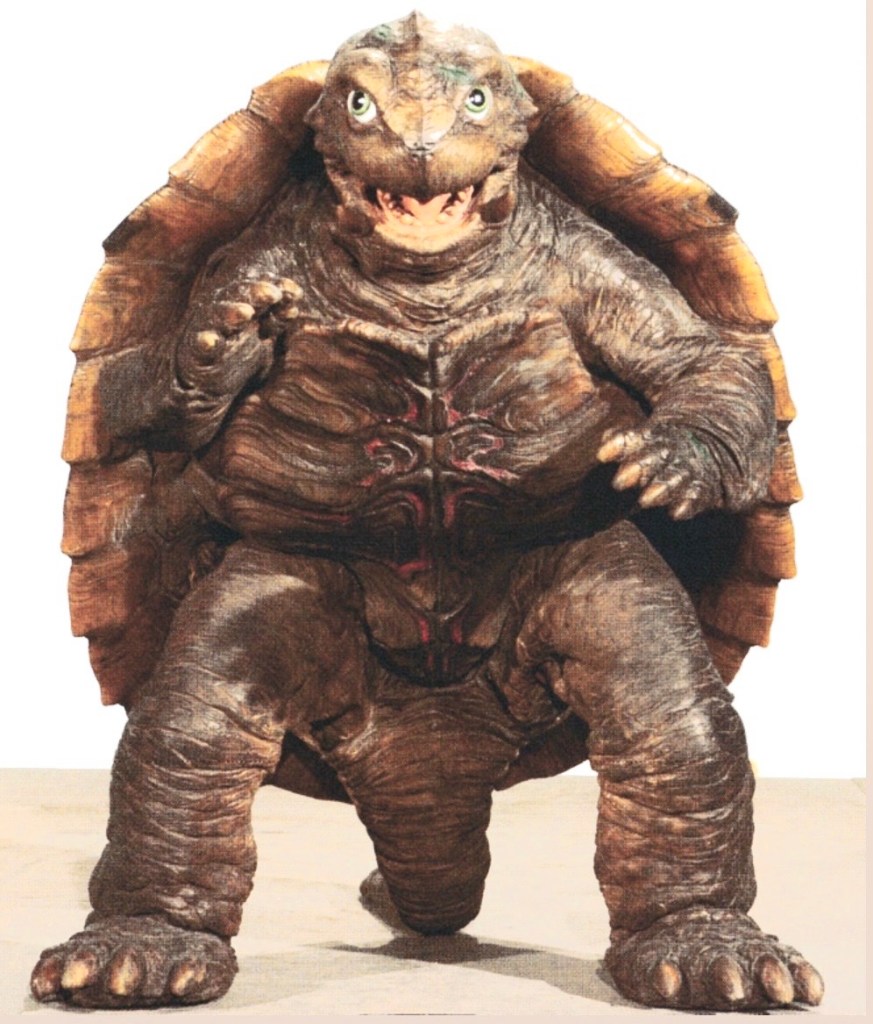
In terms of there being other monsters, it was teased in the trailers that the three headed space dragon Ghidorah might turn up in this one too. I’m not worried about spoilers because this is confirmed right at the very, very start. The movie is actually more about this big creature than the famous title monster, at least for the first hour. Of all of the classic Japanese Kaiju this was the one that was most likely to feature, partly because he is considered Godzilla’s nemesis but also because, and this is relative, he’s not as silly as the others. With its serious tone this was going to find it hard to pull off Mothra (a giant lepidopteran, as the name suggests) or Gamera (he’s a massive turtle – you should see the guy!).
So there are some monster smack downs then but unlike the Hollywood versions that is not what everything revolves around. It’s good that they find a reason for these two prehistoric goliaths for go at one another, rather than some tosh about them being ancient enemies, and the fights are shockingly brutal. More important is the human element though. This is what made this film’s predecessor so exceptional and it continues here. When I say the human element I guess what I am talking about is the emphasis on human loss. This is not a big action movie where people are expendable; the stakes of what is going on never comes second to the spectacle as it so often does elsewhere. For a big monster movie both of these films have been unusually moving. If you are upset by the sounds of children small crying then in places this is going to break your heart. Kôichi and Noriko from the last film are part of a proper family now and that is what everything hangs on, but every person here has value beyond being lizard food. Noriko’s surprise survival in the previous instalment is explained as well and actually becomes part of the plot while she in turn becomes key to the action.
Godzilla Minus Zero is not quite as good as Godzilla Minus One. Its quality certainly isn’t as much of a surprise and while this may be a translation issue I fear the dialogue is occasionally corny. The title is also confusing. Last time it referred to Japan being at absolute zero following the war and how the appearance of a fifty metre rampaging, laser spewing dinosaur took them even lower. This one doesn’t seem to follow this but I guess if -0, +0 and 0 are mathematically all the same thing then minus zero does follow minus one so that works. This is most definitely a great follow up from a cinematic point of view.
.