.
At the end of the 2010s I did a ranking of my fifty films of the decade. The top positions went to Nolan’s Inception and Aronofsky’s Black Swan and these remain two of my best loved movies from a couple of my favourite filmmakers.
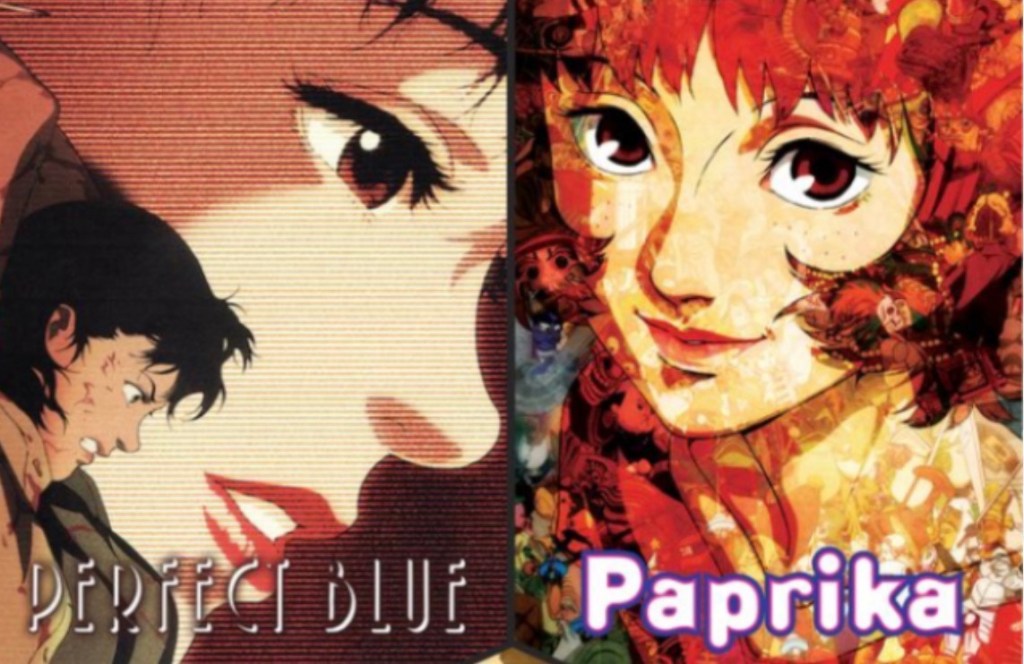
It is only now though that I have discovered that both of these were very heavily influenced by the work of one other director, which frankly was a surprise and something I feel I should have known. What is exciting is that I didn’t learn this by just reading it somewhere (although it seems a lot has been written about it) but from seeing the films in question. It was after a recent trip to Japan I decided to watch the celebrated 1997 anime Perfect Blue and became aware that this story of a young performer getting consumed by her desire to succeed and be admired, to the point that she starts suffering confusing and dangerous paranoid hallucinations was something I had kind of seen before. Having really enjoyed the movie I then sought out 2006’s Paprika and again without expectation of the same sense of déjà vu, found that the depiction of a technology that allowed you to enter, share and manipulate someone else’s dreams was also more than a bit familiar.
These are just two of the four animated movies director Satoshi Kon made, and while the others Tokyo Godfathers and Millennium Actress do not have the same explicit Hollywood parallels, his entire oeuvre has been cited as inspiration by others such as Guillermo del Toro and The Daniel’s. Darren Aronofsky and Christopher Nolan have never really discussed the extent to which they took their ideas from Kon’s movies but both have said that they had seen and greatly admired the films in question so the impact of his work on theirs is pretty irrefutable. Claims that either man has straight ripped off Kon, which much of the sensationalist column inches suggest, are unfair as what they do with similar ideas has an originality of its own but if like me you have been excited by the concepts in this pair of American movies, both released in 2010 which is the year Kon passed away aged 46, then you are going to love seeing them explored in different ways under another, very different, eye. Kon clearly has a vision and an ambition that matches theirs, and it is fascinating to see these presented in a different filmic format.
Perfect Blue is surprisingly darker than Black Swan. Rendering your images in animation lets you get away with things you can’t so much in live action and there are some quite strong scenes of violence. There is also female nudity and a disturbing representation of sexual assault (you’ll know why I’ve described it in these terms once you’ve seen the movie because crucially no one is actually sexually assaulted). There is similar nudity in both Perfect Blue and Paprika but it isn’t demeaning even though the characters in question are a bit sexualised (and of course it is drawn not photographed). In the case of Perfect Blue both this and the apparent assault are absolutely in service of the story, and if this is perhaps not quite the case in Paprika, under Kon it always carries the power is needs to. It is never flippant.
.
.
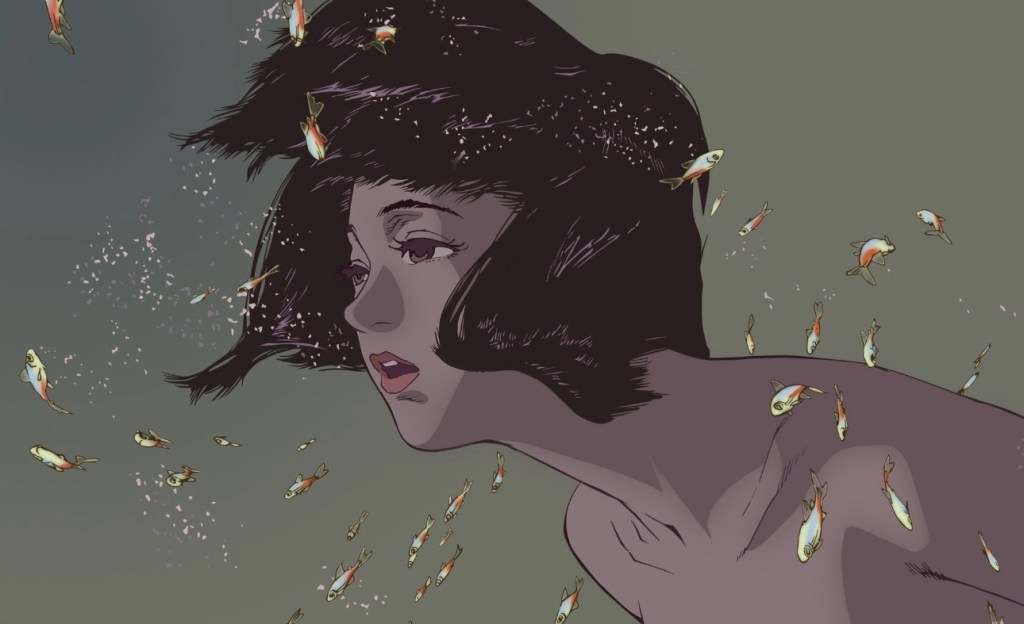
Unlike Inception, Paprika’s dream sequences feature elements of surreal fantasy placing it perhaps more alongside something like Holy Motors or The City of Lost Children than anything from Nolan’s grounded filmography. Visually these elements are spectacular but like the brutalist components of Perfect Blue are never included for their own sake, only when slave to the plot. Everything about both of these movies is utterly meticulous.
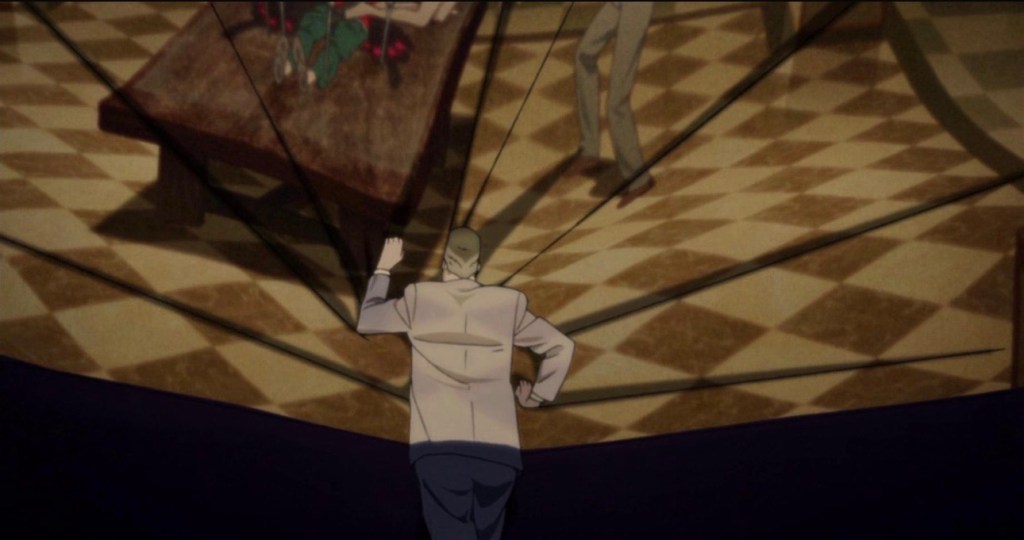
There is also a very conscious handling of cinema as a medium in both. Not only in the genre conventions but also in the design and framing. A lot of anime is made for TV, Kon himself made a celebrated mini series called Paranoia Agent, but these are demonstrably movies, made for the theatrical experience. Paprika even tangibly teaches about fundamental guidelines of filmmaking at one point, showing it knows what it is talking about by actually talking about it. There are explicit parallels drawn between shared dreaming and cinema as well and at one point a character even pushes into someone’s dream through a movie screen. It may not always be subtle but it is genius. How could any lover of film not go for all of this?
.
.
Of course as well as proving the inspiration for other major directors Satoshi Kon had his own creative touch points, including Gilliam, Hayao Miyazaki and Phillip K. Dick and finding his movies and drawings parallels in all these directions has been an exceptional treat. In terms of Japanese animation I have long enjoyed the output of Mamoru Hosoda, Makoto Shinkai and am a big fan of Studio Ghibli, and like everyone I’ve seen Ghost in the Shell and Akira, but have too long inadvertently ignored this guy. I’m glad I did though as I can’t even remember the last time I discovered a director and got a chance to work through their back catalogue; a filmography which in this case, while short, has a particularly significant place in contemporary turn of the century cinema.
If you don’t know Satoshi Kon then frankly that’s your weekend sorted.
.
Perfect Blue, Paprika and Tokyo Godfathers are available digitally.
All of Kon’s work can be bought on Blu Ray, including Paranoia Agent.

