.
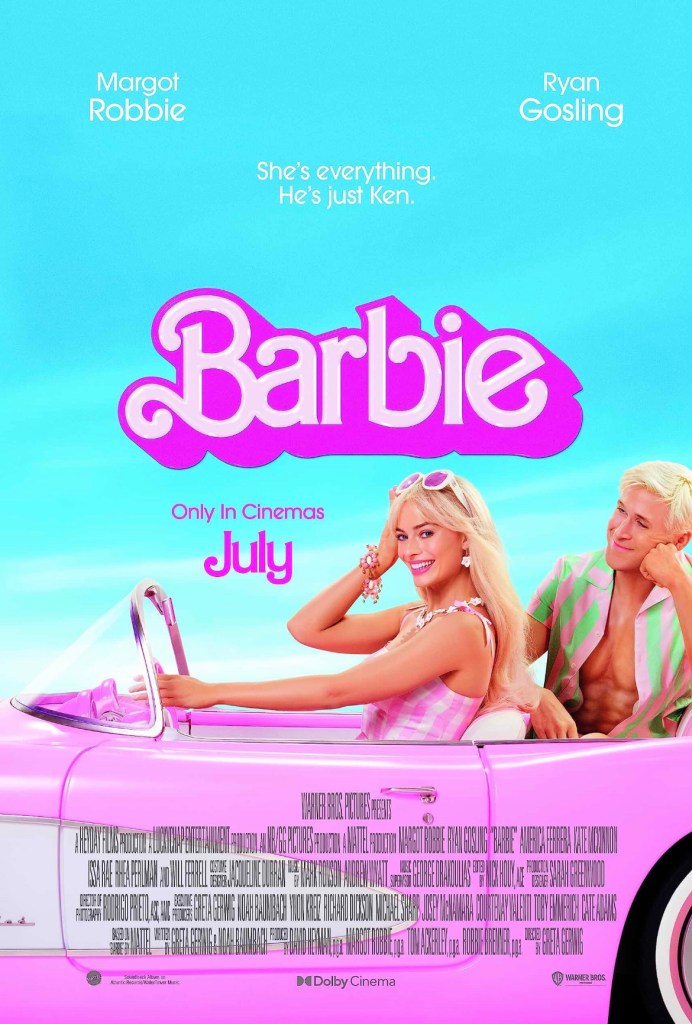
So, I didn’t see Barbie and Oppenheimer on the same day in the end. This was more through circumstances than choice but I am really pleased it worked out that way because Nolan’s film really stayed with me and I don’t think I’d have had the head space for a double bill. Now that the dust has settled after Oppenheimer thought I am ready to get into the other big, and frankly quite bizarre, movie that came out this weekend.
It has to be said that I was already pretty familiar with Barbie before this started. As the father of three daughters this toy brand has been some part of my life now for a couple of decades. It wasn’t so much that there were a lot of the dolls around the house, not too many anyway, but my girls did enjoy a lot of those straight to home viewing, poorly computer animated features that set up Barbie as an actor playing a series of fairytale characters. Barbie in The Nutcracker, Barbie in The Twelve Dancing Princesses, Barbie as the Princess and the Pauper, Barbie and the Diamond Castle, Barbie in A Christmas Carol, Barbie as the Island Princess and Barbie Mariposa and Her Butterfly Fairy Friends were all keen favourites, and there were still lots we didn’t see. These films were corny but they did by their nature all have female characters with agency and confidence driving the narratives.
Perhaps more relevant to this new movie though was a witty web series entitled Barbie: Life in The Dreamhouse that ran for eighty three ten minute episodes from 2012 to 2015. Also animated but with none of the simple, saccharine sentiment of the movies, this show was still for kids but deliberately punctured and satirised much of what Barbie has become known for. It was very knowing and challenged the narrow ideas of being affluent, blonde, white, thin, overly righteous and stereotypically feminine that Barbie is associated with, ideas that the aforementioned DVD films very much compounded. Like all of Barbie’s other small screen appearances this was produced by Mattel, the company behind the product, but here they weren’t afraid to mock what they had created.
Barbie: Life in the Dreamhouse, like Toy Story 3 of course, also depicted Ken as a shallow and fairly simple minded character whose entire reason for being was to please Barbie due to his belief that he was made for her.
Now that Barbie has made the transition to live action, a lot of these elements have carried over with her. It certainly imagines a world where women can be in charge of their own story but recognises that having a figure like Barbie, with a figure like Barbie, at the centre of this is perhaps not presenting the broadest female role model. Ken is also once again a total lovelorn himbo.
Under the direction of Greta Gerwig it goes so much further though and quickly starts to examine notions of growing up and adulthood and how being a parent both distances you and draws you back to the concerns of children. It has a keen focus on the whole of human existence and, as is no surprise with this director, it takes a scalpel to gender politics.
It has to be said that the blade is fairly blunt though, unlike Barbie: Life in the Dreamhouse this is not really satire. It’s more like commentary. Mattel are still at the heart of it, literally in fact, but none of the scenes that directly place representatives of the company on the screen actually add anything. As such it is almost as though the execs behind this insisted they feature somewhere and there is even a part of me that wonders if having them there with nothing to really do could actually be a smart comment on how irrelevant they are, but the film isn’t that subtle anywhere else, so perhaps not.
There is no getting past the fact that this film is quite odd and is underwritten in almost as many places as it shows insight. There is no effort made to explain how the universe it creates works for example, in fact they go to pains to highlight they have no explanation for this at all, but it is as though they didn’t really care. A Barbie film of some sort has been on the cards for a while and has been passed around various Hollywood personalities, including Diablo Cody, Amy Schumer and Patty Jenkins, and it is notable that the plan to make the movie in some way predates the plan to make it this way. You do get the impression that Gerwig has come at this from the point of view of what she can do with Barbie rather than with a ground up approach of doing something with Barbie herself. This is demonstrably her take on an already existing idea rather than one she has had personally. The Lego Movie by comparison, to which this owes a large debt, had a more rounded and consistent sensibility. Look also at the 2002 Lindsay Lohan and Tyra Banks Disney TV movie Life Size, in which a young girl wishes her fashion doll to life in the real world. That definitely isn’t a better film but it had a more straight forward premise. This on the other hand, is not as tight in its concept.
The film also has a very surface attitude to men and sexism. Ryan Gosling’s Ken is a great comedy creation but with his incel tendencies I didn’t like his character as much as I think I was supposed to. Furthermore, the movie is strangely forgiving of male dominance, as if it is saying ‘Oh, the patriarchy? Yes aren’t men silly, bless them!’ In many respects the movie feels like a Saturday Night Live sketch writ large (some of the casting contributes to this) and I’m not sure it sustains the feature length running time.
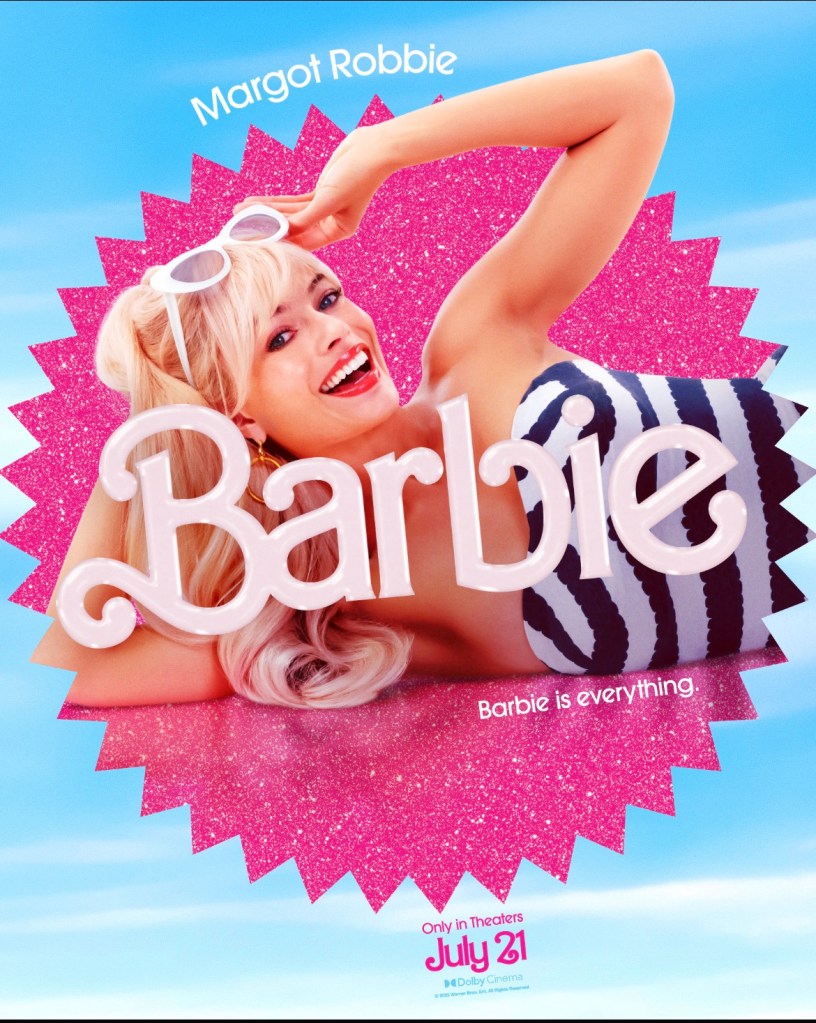
Holding it all together is Margot Robbie’s lead performance though. Respectfully, those people who have said that Ken steals the show and what a shame this is in a purposefully feminist film are missing something. Yes, the man is there making more noise and getting noticed but next to him is a woman who is fighting to maintain her intelligence and emotional strength throughout and ultimately none of this would work, or have an ounce of the sophistication and class, without her. That’s the point. Robbie is the soul of the film and the emotion she brings to a doll having an existential crisis is genuinely moving. She is not struggling with her identity and place in the world like Buzz Lightyear suddenly discovering he wasn’t a real space ranger; she is an attractive woman having to come to terms with the attitudes this generates in others, both male and female, as well as the frustrating realisation that equality between the sexes is not as easy to achieve as it really ought to be. Personally speaking I am not a Barbie and I am not a woman but I found all of this to be very relatable. The final stage of her journey is perhaps contrived and certainly surreal but her closing line is the perfect cap on everything that has come before.
This said, there is also a great speech on what it is to be a woman that is not delivered by Robbie. It is the best piece of writing in the film and I have included it in full at the end of this piece. Don’t read it until you have seen it in context though.
In the end I fear the ambition behind the movie exceeds the execution but it does have real highs and when I say it is probably the best that a Barbie movie could have been I mean that as a compliment. It isn’t as good as Gerwig’s previous work and I hope this isn’t the point that we trace back to in the future when we mourn the loss of the director’s sense on individuality and filmmaking identity, but it is fun and it has some important things to say. It most certainly doesn’t require the same headspace as Christopher Nolan’s movie, but there is no denying it appeals much more to the heart.
.
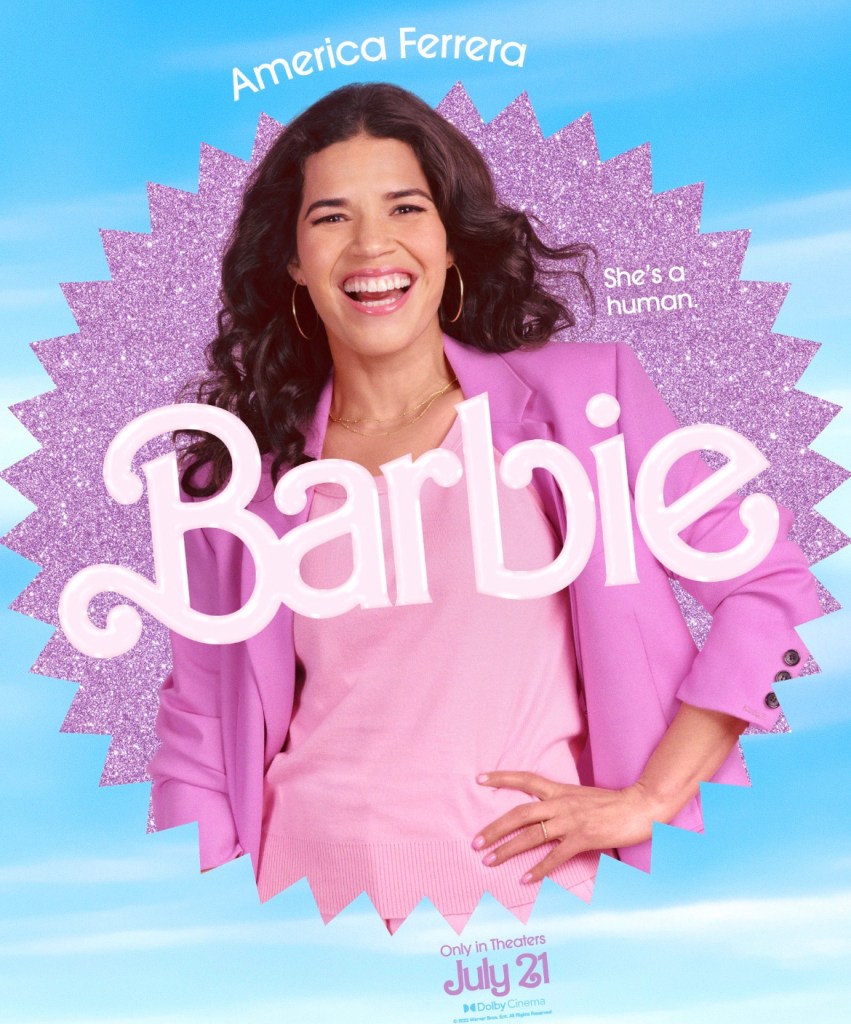
Here’s that America Ferrera Barbie monologue in full as promised:
“It is literally impossible to be a woman. You are so beautiful, and so smart, and it kills me that you don’t think you’re good enough. Like, we have to always be extraordinary, but somehow we’re always doing it wrong.
You have to be thin, but not too thin. And you can never say you want to be thin. You have to say you want to be healthy, but also you have to be thin. You have to have money, but you can’t ask for money because that’s crass. You have to be a boss, but you can’t be mean. You have to lead, but you can’t squash other people’s ideas. You’re supposed to love being a mother, but don’t talk about your kids all the damn time. You have to be a career woman, but also always be looking out for other people. You have to answer for men’s bad behaviour, which is insane, but if you point that out, you’re accused of complaining.
You’re supposed to stay pretty for men, but not so pretty that you tempt them too much or that you threaten other women because you’re supposed to be a part of the sisterhood. But always stand out and always be grateful. But never forget that the system is rigged. So find a way to acknowledge that but also always be grateful. You have to never get old, never be rude, never show off, never be selfish, never fall down, never fail, never show fear, never get out of line. It’s too hard! It’s too contradictory and nobody gives you a medal or says thank you! And it turns out in fact that not only are you doing everything wrong, but also everything is your fault.
I’m just so tired of watching myself and every single other woman tie herself into knots so that people will like us. And if all of that is also true for a doll just representing women, then I don’t even know.”
Reference here
 The Not Left Handed Film Guide